Title: Smiles to Go
Author: Jerry Spinelli
Publisher: Harper Collins
Year: 2009
Pages: 272
Genre: Realistic Fiction
Themes: Friendship, First Love, Family
Age Range: 4th-7th Grade
Summary:
Will Tuppence likes things orderly, planned out, and unchanging. The high school freshman and future astronomer has lived most of his life with one comforting fact at its foundation-protons never die. And because protons can never be destroyed, then regardless of what happens to him as his body changes and eventually dies, some part of him will continue to exist. But then the unthinkable happens-on Sept. 26 at 10:15 AM he learns that scientists have finally recorded the tell-tale flash that signals the death of a proton. Suddenly, everything that he thought he knew about the physical world is called into question. And just as suddenly, his relationship with his best friends Mi-Su and BT, as well as his relationship with his little sister Tabby, begin to change as well. Does Mi-Su like him like him? Did he really catch her kissing BT? Will BT ever make something of himself? Will his little sister ever leave him alone? As events spin out of Will's control, he is forced to come to terms with the fact that worrying about the eventual death of his protons is less important than worrying about his loved ones in the here and now.
Review:
Spinelli's books are always spot on when it comes to creating authentic adolescent characters, and Will Tuppence is no exception. He's also pretty good at writing characters who are clueless about what is really important in life, and Will is certainly that. Will's character reveals the contradiction that lies at the heart of most transitions, and especially the one from child to teen to adult; we want things to stay the same at the same time that we desperately want change. Will was happy with his world just the way it was-except for his annoying little sister, of course. He loved his friends, he enjoyed their Saturday night Monopoly routine, he frankly enjoyed feeling superior to his friend BT, who seemed like a soul doomed to wander lost with no real purpose in life. But inevitably things started to change-he started having feelings for Mi-Su, and then started having jealousy towards BT when he caught the kissing under the stars. He felt even more jealousy when BT skateboarded down Dead Man's Hill, the only person ever to do so. And it seemed like no matter what he said or did, his little sister became more determined to torment him day and night.
When Tabby is seriously injured in an attempt to re-create BT's amazing ride down Dead Man's Hill, Will is forced to confront his own ideas about what it important. To be perfectly honest, it forces him to stop thinking only of himself. He spends most of the novel being pretty self-centered, thinking about everything that happens only as it relates to him. It also forces him to accept the people he loves for who they are, instead of trying to force them into the mold he wants to make for them.
I am not in love with this book the way I was with Stargirl, but it is another solid performance from Spinelli, and would make a good addition to any classroom library.
Showing posts with label high school. Show all posts
Tuesday, July 17, 2012
Wednesday, June 20, 2012
Peeled, by Joan Bauer
Title: Peeled
Author: Joan Bauer
Publisher: Putnam Juvenile
Year: 2008
Pages: 256
Genre: Realistic Fiction
Themes: Truth, Fear, Manipulation of the Press, Community, Loss
Age Range: 5th through 10th Grade
Summary: from Goodreads
Something's rotten in the heart of apple country!
Author: Joan Bauer
Publisher: Putnam Juvenile
Year: 2008
Pages: 256
Genre: Realistic Fiction
Themes: Truth, Fear, Manipulation of the Press, Community, Loss
Age Range: 5th through 10th Grade
Summary: from Goodreads
Something's rotten in the heart of apple country!
Hildy Biddle dreams of being a journalist. A reporter for her high school newspaper, The Core, she's just waiting for a chance to prove herself. Not content to just cover school issues, Hildy's drawn to the town's big story--the haunted old Ludlow house. On the surface, Banesville, USA, seems like such a happy place, but lately, eerie happenings and ghostly sightings are making Hildy take a deeper look.
Her efforts to find out who is really haunting Banesville isn't making her popular, and she starts wondering if she's cut out to be a journalist after all. But she refuses to give up, because, hopefully, the truth will set a few ghosts free.
Review:
Writers like to write about writing-that is clear. Bauer chose to write about journalism in this book, and she did an excellent job of showing what good journalism can be, even when done by high school students. But what made this book more charming was the fact that it was essentially a cozy mystery for the tween set. If you aren't familiar with cozy mysteries, they are mystery novels written around a specific industry or community. There are cozy mysteries about farmers' markets, wine sellers, tea sellers, book sellers...they always remind me of that old show Murder, She Wrote. The setting for Peeled is apple growing country in upstate New York. Much of the novel revolves around apple growing, apple orchards, selling apple products, etc...The mystery itself is pretty innocuous. There is a death, but it was not a violent one. What really drives the novel is the conflict between real journalism and sensational, tabloid style journalism. While the book is an easy read, there is enough substance there that you could have a discussion about how people can use the media to manipulate public opinion. Whether you choose to use it as a teaching tool or not, this is a good book to have in your classroom library.Wednesday, May 2, 2012
The Latte Rebellion, by Sarah Jamila Stevenson
Title: The Latte Rebellion
Author: Sarah Jamila Stevenson
Publisher: Flux
Year: 2011
Pages: 327
Genre: Realistic Fiction
Themes: Identity, Racism, Social Justice, Friendship, Transition from High School
Age Range: 9th Grade and Above
Summary: (from Goodreads)
When high school senior Asha Jamison gets called a "towel head" at a pool party, the racist insult gives Asha and her best friend Carey a great money-making idea for a post-graduation trip. They'll sell T-shirts promoting the Latte Rebellion, a club that raises awareness of mixed-race students.
Seemingly overnight, their "cause" goes viral and the T-shirts become a nationwide fad. As new chapters spring up from coast to coast, Asha realizes that her simple marketing plan has taken on a life of its own-and it's starting to ruin hers. Asha's once-stellar grades begin to slip, threatening her Ivy League dreams, and her friendship with Carey is hanging by a thread. And when the peaceful underground movement turns militant, Asha's school launches a disciplinary hearing. Facing expulsion, Asha must decide how much she's willing to risk for something she truly believes in.
Review:
The Latte Rebellion highlights an increasingly important theme of modern American life-the effects of racism on those of mixed racial background. As our country becomes increasingly diverse, and old social boundaries about who dates and marries who break down, more and more children are coming into our schools who identify as bi-racial, multi-racial, and mixed-race. The fact that we have our first mixed race president, but the narrative is that he is our first black president, highlights the point that Ms. Stevenson was trying to make by writing the book. Our society puts people into boxes based on parts of their identity that may or may not resemble the way that they identify themselves. These labels affect almost every aspect of a person's life, something that Asha discovers. From a strictly thematic point of view, this novel has important points to make.
Unfortunately, I felt that the story was too slow...there was an awful lot of internal dialogue that I didn't think was strictly necessary, and it felt like it took forever to get to the "event" that caused all of the trouble. In between chapters, there are excerpts from the disciplinary hearing held towards the end of the book, and all of them are sort of annoyingly vague about what it is that Asha is actually being accused of. Over all I felt that the action was not well-paced, and the book probably could have been shorter by about 50 pages.
The other things that I did not care for was the portrayal of Asha's parents in the book, but I will admit that has more to do with my own personal liberal bias than any issues I have with the author's craft. I was appalled at the lack of support that the parents showed their fairly amazing child in her efforts to make the world a more accepting place for people of mixed racial and ethnic backgrounds. Their daughter was a straight A student, had never been in trouble before, was in lots of extra-curriculars and clubs, and had a social conscience. I would be thrilled to have a child like Asha, and I certainly would have backed her up if her school tried to label her a terrorist for starting a peaceful social justice club. Instead, Asha's parents tell her how disappointed they are in her, and how selfish and childish she is for jeopardizing her future by participating in something so controversial. I was annoyed by pretty much every adult in the book, and with the attitude of some of the other youth as well. Really, starting a social justice club should not be something that frightens people, and I thought that the reaction by the school and the parents was completely out of line with what was actually happening. But then I think about things like the Tennessee law that no one is allowed to use the word gay in the classroom, and I realize that maybe my own liberal views and the fact that I live in a pretty liberal metro area make me blind to the attitudes that exist in other places.
Author: Sarah Jamila Stevenson
Publisher: Flux
Year: 2011
Pages: 327
Genre: Realistic Fiction
Themes: Identity, Racism, Social Justice, Friendship, Transition from High School
Age Range: 9th Grade and Above
Summary: (from Goodreads)
When high school senior Asha Jamison gets called a "towel head" at a pool party, the racist insult gives Asha and her best friend Carey a great money-making idea for a post-graduation trip. They'll sell T-shirts promoting the Latte Rebellion, a club that raises awareness of mixed-race students.
Seemingly overnight, their "cause" goes viral and the T-shirts become a nationwide fad. As new chapters spring up from coast to coast, Asha realizes that her simple marketing plan has taken on a life of its own-and it's starting to ruin hers. Asha's once-stellar grades begin to slip, threatening her Ivy League dreams, and her friendship with Carey is hanging by a thread. And when the peaceful underground movement turns militant, Asha's school launches a disciplinary hearing. Facing expulsion, Asha must decide how much she's willing to risk for something she truly believes in.
Review:
The Latte Rebellion highlights an increasingly important theme of modern American life-the effects of racism on those of mixed racial background. As our country becomes increasingly diverse, and old social boundaries about who dates and marries who break down, more and more children are coming into our schools who identify as bi-racial, multi-racial, and mixed-race. The fact that we have our first mixed race president, but the narrative is that he is our first black president, highlights the point that Ms. Stevenson was trying to make by writing the book. Our society puts people into boxes based on parts of their identity that may or may not resemble the way that they identify themselves. These labels affect almost every aspect of a person's life, something that Asha discovers. From a strictly thematic point of view, this novel has important points to make.
Unfortunately, I felt that the story was too slow...there was an awful lot of internal dialogue that I didn't think was strictly necessary, and it felt like it took forever to get to the "event" that caused all of the trouble. In between chapters, there are excerpts from the disciplinary hearing held towards the end of the book, and all of them are sort of annoyingly vague about what it is that Asha is actually being accused of. Over all I felt that the action was not well-paced, and the book probably could have been shorter by about 50 pages.
The other things that I did not care for was the portrayal of Asha's parents in the book, but I will admit that has more to do with my own personal liberal bias than any issues I have with the author's craft. I was appalled at the lack of support that the parents showed their fairly amazing child in her efforts to make the world a more accepting place for people of mixed racial and ethnic backgrounds. Their daughter was a straight A student, had never been in trouble before, was in lots of extra-curriculars and clubs, and had a social conscience. I would be thrilled to have a child like Asha, and I certainly would have backed her up if her school tried to label her a terrorist for starting a peaceful social justice club. Instead, Asha's parents tell her how disappointed they are in her, and how selfish and childish she is for jeopardizing her future by participating in something so controversial. I was annoyed by pretty much every adult in the book, and with the attitude of some of the other youth as well. Really, starting a social justice club should not be something that frightens people, and I thought that the reaction by the school and the parents was completely out of line with what was actually happening. But then I think about things like the Tennessee law that no one is allowed to use the word gay in the classroom, and I realize that maybe my own liberal views and the fact that I live in a pretty liberal metro area make me blind to the attitudes that exist in other places.
Wednesday, June 30, 2010
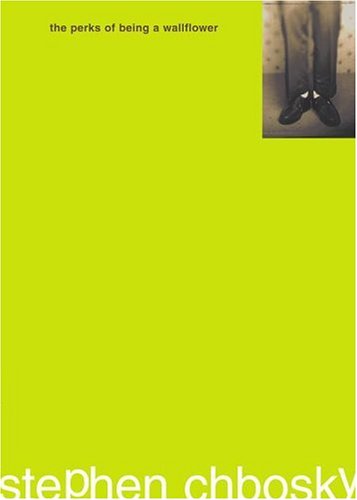
The Perks of Being a Wallflower, by Stephen Chbosky
Title: The Perks of Being a Wallflower
Author: Stephen Chbosky
Publisher: MTV Books (who even knew there was such a thing!)
Pages: 213
Genre: Realistic Fiction
Age Level: 9th Grade and Up
Plot Summary:
Charlie is a 15 year old high school freshman living in Pennsylvania. His brother is a football star, his sister is pretty and popular, and he is...well, he is something else altogether. His unique perspective on family, love, and friendship are shared through letters that he writes to an unknown someone. Charlie feels most comfortable in the "quiet", and is merely an observer in life until he meets Patrick (who is having a secret relationship with the quarterback), Sam (who Charlie falls deeply in love with), and their group of quirky friends. Even as he experiences his first cigarette, his first drink, his first pot, his first date, his first dance, and his first Rocky Horror Picture Show, he feels like an outsider looking in-a wallflower, observing but not participating fully. When he finally gets a chance at what he thinks he wants, he realizes that until he deals with the reason for his reserve, his sadness, and his anger he will never be a full participant in life.
Review:
The Perks of Being a Wallflower is a tribute to all counter-culture, disaffected novels for youth everywhere. Chobsky makes no effort to hide his influences, giving the fictional Charlie a teacher who assigns him Catcher in the Rye, On the Road, Naked Lunch, and The Stranger as reading assignments. In their tradition, Charlie and his friends are at once desperate for a feeling of belonging while at the same time rejecting anything that smacks of the conformity that would make them belong. Patrick, Sam, and the rest are a perfect backdrop for Charlie, who is about as unconventional as they come. He is almost paralyzed by the fear of doing something wrong, and as a result does almost nothing at all, becoming a mirror for his friends without ever showing much of his true self. It is clear long before the big reveal at the end that something is just not right with Charlie-he gets so angry playing sports his parents made him quit, he gets so sad that he can't function, he's been in and out of hospitals-add the hormones of a 15 year old and it's no wonder he was an emotional wreck.
Sometimes the portrayal of Charlie is a little too on-the-nose, but despite some of the criticisms I've read of this book, there are kids like Charlie out there. Chobsky creates in this book a doorway for today's youth to discover and appreciate the same malaise that previous generations got from Catcher in the Rye. Is this book as good as CITR, well, no. But as homages go it is pretty good.
Teacher Resources:
Mr. Jeffrey's Lesson Plans (scroll down the page)
WebEnglishTeacher Anticipation Guide
Young Adult Review-Teaching Controversial Texts
YA Lit Gourley
Author: Stephen Chbosky
Publisher: MTV Books (who even knew there was such a thing!)
Pages: 213
Genre: Realistic Fiction
Age Level: 9th Grade and Up
Plot Summary:
Charlie is a 15 year old high school freshman living in Pennsylvania. His brother is a football star, his sister is pretty and popular, and he is...well, he is something else altogether. His unique perspective on family, love, and friendship are shared through letters that he writes to an unknown someone. Charlie feels most comfortable in the "quiet", and is merely an observer in life until he meets Patrick (who is having a secret relationship with the quarterback), Sam (who Charlie falls deeply in love with), and their group of quirky friends. Even as he experiences his first cigarette, his first drink, his first pot, his first date, his first dance, and his first Rocky Horror Picture Show, he feels like an outsider looking in-a wallflower, observing but not participating fully. When he finally gets a chance at what he thinks he wants, he realizes that until he deals with the reason for his reserve, his sadness, and his anger he will never be a full participant in life.
Review:
The Perks of Being a Wallflower is a tribute to all counter-culture, disaffected novels for youth everywhere. Chobsky makes no effort to hide his influences, giving the fictional Charlie a teacher who assigns him Catcher in the Rye, On the Road, Naked Lunch, and The Stranger as reading assignments. In their tradition, Charlie and his friends are at once desperate for a feeling of belonging while at the same time rejecting anything that smacks of the conformity that would make them belong. Patrick, Sam, and the rest are a perfect backdrop for Charlie, who is about as unconventional as they come. He is almost paralyzed by the fear of doing something wrong, and as a result does almost nothing at all, becoming a mirror for his friends without ever showing much of his true self. It is clear long before the big reveal at the end that something is just not right with Charlie-he gets so angry playing sports his parents made him quit, he gets so sad that he can't function, he's been in and out of hospitals-add the hormones of a 15 year old and it's no wonder he was an emotional wreck.
Sometimes the portrayal of Charlie is a little too on-the-nose, but despite some of the criticisms I've read of this book, there are kids like Charlie out there. Chobsky creates in this book a doorway for today's youth to discover and appreciate the same malaise that previous generations got from Catcher in the Rye. Is this book as good as CITR, well, no. But as homages go it is pretty good.
Teacher Resources:
Mr. Jeffrey's Lesson Plans (scroll down the page)
WebEnglishTeacher Anticipation Guide
Young Adult Review-Teaching Controversial Texts
YA Lit Gourley
Speak, by Laurie Halse Anderson
Title: Speak
Author: Laurie Halse Anderson
Publisher: Penguin
Pages: 198
Genre: Realistic Fiction
Age Level: 9th-12th Grade
Plot Summary:
Melinda is a freshman in high school. Instead of being excited to start the new year with her friends, she is feeling shunned, and outcast. You see, there was a big end-of-summer party, and everyone thought she called the cops to bust it. The truth is something that she can't tell anyone-not her parents, not her former friends, not her teachers. Since she can't let the truth out, she decided to keep everything inside, barely speaking, skipping classes, and avoiding all thoughts of IT-that thing that happened to her. She keeps it all inside, that is, until her ex-best friends starts dating Andy Evans-and IT forces her to make a difficult choice. Speak up, and relive what happened, or stay quiet, and put her friend in danger.
Review:
It is hard to write the above summary without giving any spoilers about the big reveal-but I imagine anyone who is old enough to be reading this review probably already figured out what happened to Melinda. I have to admit that it took me a little bit of time to get into this story. Anderson does a great job of setting the scene of Melinda's deconstruction. First it is little things-biting her lips, being late for class, not responding to teachers or the other kids-none of whom are terribly nice to her anyway. But as you read, the tension continue to build, as Melinda gets quieter and quieter, and more and more withdrawn. The only adult who really seems to "see" her is her art teacher, and he encourages her to use art to express whatever it is that is building inside. Finally, Melinda must make a choice-let her friend get hurt, or continue trying to hide from what happened to her. Anderson does a good job of showing that while Melinda thought she was hiding from the memories of that night at the party, really she was being eaten up from the inside by the things she couldn't say. It may have been a slow starter for me, but it was worth it in the end-when Melinda finally stands up and speaks.
Teaching Resources:
The Writer Lady
Ms. Hogue's Unit Guide
Speak Out! Reach Out!
Author: Laurie Halse Anderson
Publisher: Penguin
Pages: 198
Genre: Realistic Fiction
Age Level: 9th-12th Grade
Plot Summary:
Melinda is a freshman in high school. Instead of being excited to start the new year with her friends, she is feeling shunned, and outcast. You see, there was a big end-of-summer party, and everyone thought she called the cops to bust it. The truth is something that she can't tell anyone-not her parents, not her former friends, not her teachers. Since she can't let the truth out, she decided to keep everything inside, barely speaking, skipping classes, and avoiding all thoughts of IT-that thing that happened to her. She keeps it all inside, that is, until her ex-best friends starts dating Andy Evans-and IT forces her to make a difficult choice. Speak up, and relive what happened, or stay quiet, and put her friend in danger.
Review:
It is hard to write the above summary without giving any spoilers about the big reveal-but I imagine anyone who is old enough to be reading this review probably already figured out what happened to Melinda. I have to admit that it took me a little bit of time to get into this story. Anderson does a great job of setting the scene of Melinda's deconstruction. First it is little things-biting her lips, being late for class, not responding to teachers or the other kids-none of whom are terribly nice to her anyway. But as you read, the tension continue to build, as Melinda gets quieter and quieter, and more and more withdrawn. The only adult who really seems to "see" her is her art teacher, and he encourages her to use art to express whatever it is that is building inside. Finally, Melinda must make a choice-let her friend get hurt, or continue trying to hide from what happened to her. Anderson does a good job of showing that while Melinda thought she was hiding from the memories of that night at the party, really she was being eaten up from the inside by the things she couldn't say. It may have been a slow starter for me, but it was worth it in the end-when Melinda finally stands up and speaks.
Teaching Resources:
The Writer Lady
Ms. Hogue's Unit Guide
Speak Out! Reach Out!
Subscribe to:
Posts (Atom)